
Frozen food pouches must cope with low temperatures, resist punctures and seal tightly. Here is how to choose the material and pouch format.
What a frozen food pouch has to withstand
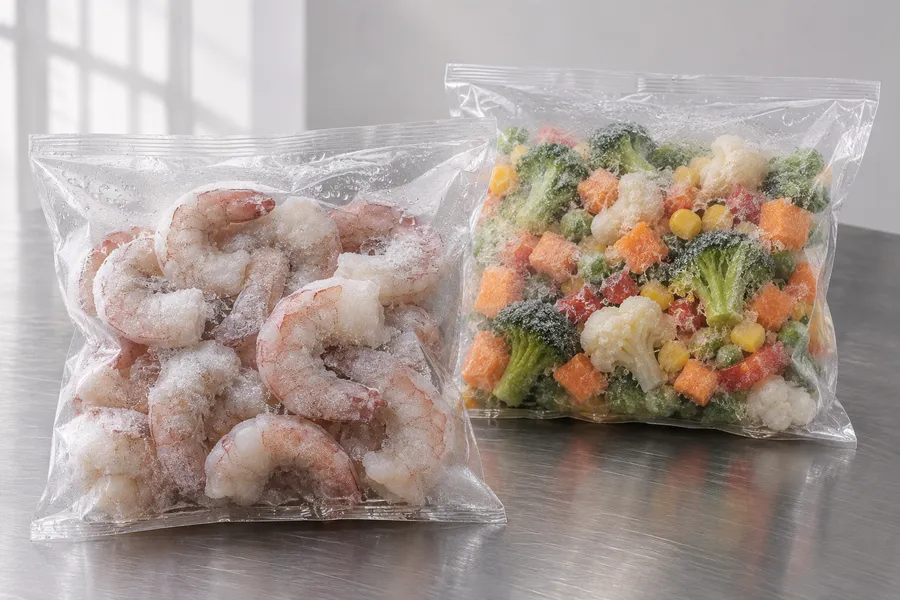
Some films turn brittle at low temperatures. Frozen items such as shrimp, bone-in cuts or chopped vegetables also have hard edges that can pierce a pack in transit. Once a pack leaks, air gets in and the food surface can suffer freezer burn.
Commonly used material structures
- NY/LLDPE: nylon adds toughness and puncture resistance, while the LLDPE sealant stays flexible in the cold.
- PET/LLDPE: a stable outer layer that prints sharply, suited to products without many sharp edges.
- PET/NY/LLDPE: extra strength for heavier fills or long-distance transport.
What to prepare before ordering
Share the food type, fill weight, storage temperature, filling method (vacuum or not) and whether the pack will be heated or boiled. Heating calls for a different structure. Test with your real product before mass production.